Going too hot too fast
Starting at 90°C / 194°F before your body has adapted to lower heat causes nausea, dizziness, and a bad first experience that kills the habit. Build up over 4 to 6 weeks. Start at 70 to 75°C (158 to 167°F).
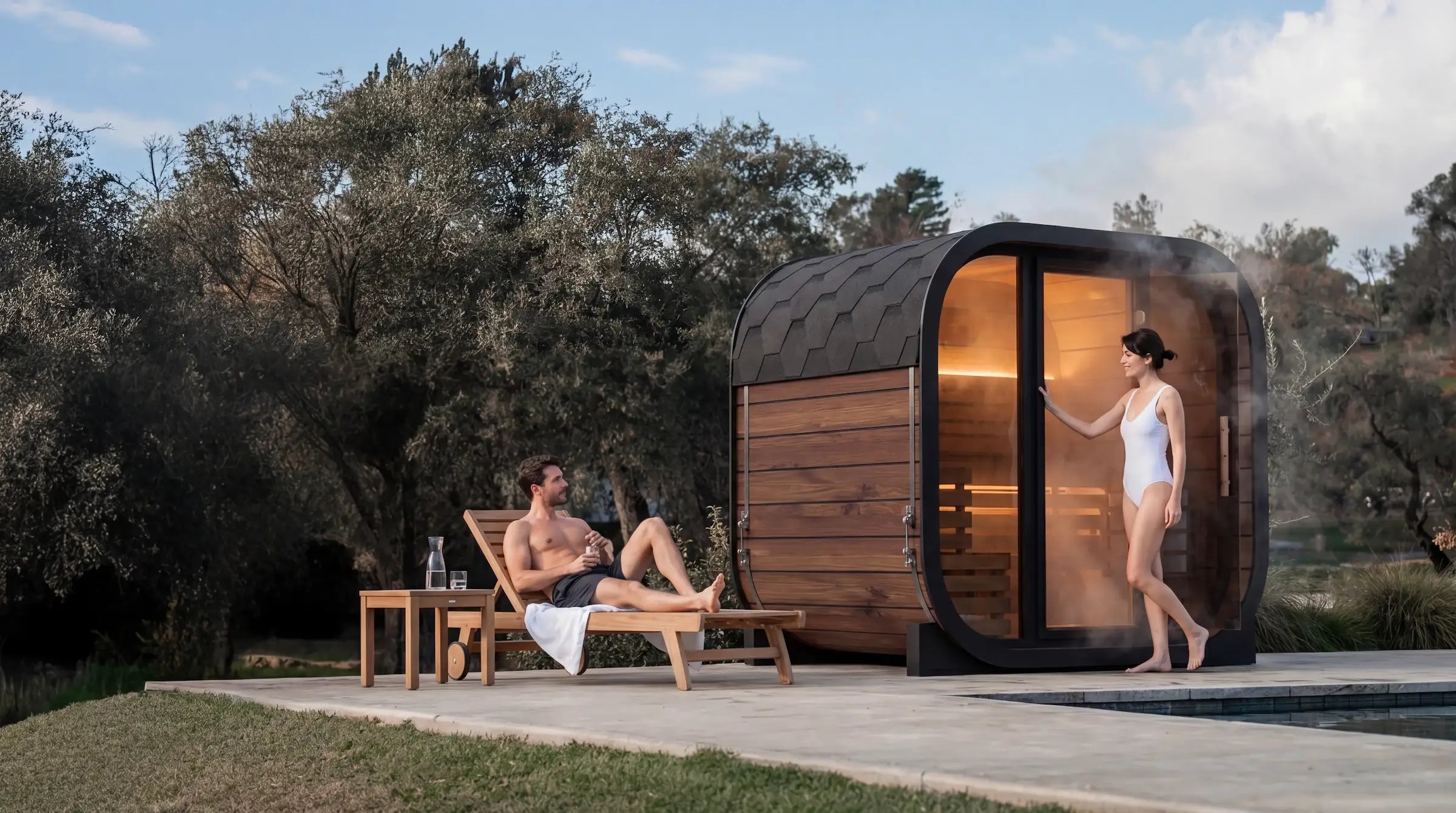
What 50+ peer-reviewed studies show — and the protocols that produce the results.
Designed to deliver the protocols Andrew Huberman, Peter Attia, and Rhonda Patrick teach.
A 20-year Finnish study of 2,315 men found 4 to 7 sauna sessions per week cut cardiovascular death risk by 50% and Alzheimer's risk by 65%.
Lower cardiovascular death risk in regular sauna users (4 to 7 sessions per week)
Heart rate during a 20-minute session — equivalent to moderate exercise, sitting still
Lower Alzheimer's risk in frequent sauna users versus once-per-week users
9 minute full read
Traditional sauna at 80°C+ (176°F+) cuts cardiovascular death risk by 50% in users who go 4 to 7 times per week
Heat triggers HSP70, BDNF, and growth hormone, the same compounds active during intense exercise
Infrared can't match the long-term mortality data because it doesn't reach the temperatures the research used
Optimal protocol: 85 to 90°C (185 to 194°F), 15 to 20 minutes per round, 2 to 3 rounds per session, 4 to 7 sessions per week
Pair with 30 to 60 seconds of cold exposure post-session for a 2.5x norepinephrine boost
Step into 80 to 90°C (176 to 194°F) and your body kicks into a stress response that mimics moderate exercise. Your heart works harder, your cells produce repair proteins, your blood vessels dilate, and your hormonal system shifts. This is hormesis, controlled stress that triggers adaptation. Five systems fire up the moment you sit down.
Sitting in a sauna pulls your heart rate from a resting 70 bpm up to 120 to 150 bpm. That's the same range you hit on a brisk jog or a moderate cycling session, except you're sitting still.
Your body has to dump heat fast, so it triggers four shifts at once:
The Finnish discovery that made cardiologists pay attention.
Dr. Jari Laukkanen at the University of Eastern Finland followed 2,315 middle-aged men for over 20 years. The data was not subtle.
The dose-response pattern matters because it points to causation, not just correlation. Higher frequency, lower risk, in a measurable gradient.
What this means for you.
If you can't train hard because of injury, age, or mobility, sauna gives you cardiovascular conditioning without the joint load. If you already train, sauna stacks with the effect rather than replacing it.
Laukkanen et al. (2015) JAMA Internal Medicine 175:542-548. Kukkonen-Harjula et al. (1989) European Journal of Applied Physiology 58:543-550.
When your core temperature crosses 38.5°C (101.3°F), your cells start producing heat shock proteins, or HSPs. These are molecular chaperones that protect and repair damaged proteins inside your cells.
HSPs handle five jobs:
Why HSPs matter more as you age.
HSP production drops with age, which is one reason cells get worse at repairing themselves over time. Regular sauna keeps HSP expression elevated for hours after a session, with the effect compounding over weeks of consistent use.
The neurological angle.
Misfolded proteins are the foundation of three major neurological diseases:
HSPs prevent and clear these aggregates before they become toxic. Finnish research found 4 to 7 sessions per week associated with 65% lower Alzheimer's risk and 66% lower dementia risk. That is an effect size no current pharmaceutical matches.
Laukkanen et al. (2017) Age and Ageing 46:245-249. Richter et al. (2010) Molecular Cell 40:253-266.
Your liver and kidneys handle most detoxification, but sauna increases the sweat pathway. That matters for a specific category of toxins your other systems struggle with: fat-soluble compounds that accumulate in tissue.
What studies find in sauna sweat:
Lead concentrations in sweat run substantially higher than in blood. Mercury shows up in sweat even when blood tests come back clean.
How to maximize the detox effect:
Sauna does not cure heavy metal poisoning, and anyone selling that claim is overstating. What it does deliver is a measurable elimination route for compounds your other systems can't easily flush.
Genuis et al. (2011) Journal of Environmental and Public Health. Sears et al. (2012) Journal of Environmental and Public Health 2012:184745.
Sauna produces growth hormone increases that rival intense exercise. The exact magnitude depends on protocol:
Why growth hormone is worth optimizing.
GH drives six processes that matter for body composition and recovery:
The athlete data.
Three weeks of post-workout sauna in trained runners produced:
The mechanism is hypothalamic-pituitary axis activation. Heat triggers pulsatile GH release, and the hotter and longer the exposure within safe limits, the bigger the response.
Leppäluoto et al. (1986) Acta Physiologica Scandinavica 128:467-470. Scoon et al. (2007) Journal of Science and Medicine in Sport 10:259-262. Stanley et al. (2015) European Journal of Applied Physiology 115:785-794.
Sauna improves insulin sensitivity through four mechanisms running in parallel:
Clinical findings in diabetic patients.
Studies in patients with type 2 diabetes show regular sauna use lowers fasting blood glucose, improves HbA1c (the 3-month glucose marker), enhances insulin sensitivity, and reduces oxidative stress markers.
Sauna and body composition.
Sauna doesn't burn major calories directly. A 20-minute session might run 300 to 500 kcal. The body composition benefit is indirect, working through better metabolic function, higher GH (which is lipolytic), improved recovery that means more training capacity, and lower inflammation that supports better fat regulation.
Treat sauna as upstream metabolic optimization that makes the rest of your training and nutrition work better.
Hooper (1999) New England Journal of Medicine 341:924-925. Beever (2009) Canadian Family Physician 55:691-696.
Most wellness data sits on weak ground. Twenty-person studies, six-week trials, surrogate markers. The Finnish sauna research is different. Two thousand three hundred fifteen men. Two decades of follow-up. Hard endpoints like death and dementia diagnosis. Here's what they found, broken into the five outcomes that matter most.
Source: Laukkanen et al. (2015) JAMA Internal Medicine. Relative mortality risk by sauna frequency in 2,315 Finnish men, controlled for age, BMI, smoking, exercise, blood pressure, cholesterol, and diabetes.
The University of Eastern Finland team tracked 2,315 men aged 42 to 60 for over two decades. They controlled for age, BMI, socioeconomic status, smoking, alcohol, exercise, blood pressure, cholesterol, and diabetes. After all those adjustments, sauna frequency still predicted longevity.
The numbers at each frequency.
Comparing 4 to 7 sessions per week against once per week:
Even 2 to 3 sessions per week showed:
Why the dose-response matters.
Correlation studies are weak on their own. They show two things move together but can't prove which causes which. The dose-response pattern in this data is different. More sauna, more protection, in a measurable gradient. That gradient is what makes the case for causation, not just association.
The pill test.
If a pharmaceutical reduced your risk of dying by 40%, you'd take it daily and pay whatever it cost. Sauna delivers that effect. The price is showing up 4 to 7 times per week.
Laukkanen et al. (2015) JAMA Internal Medicine 175:542-548.
Sudden cardiac death accounts for the majority of cardiovascular mortality. The same Finnish cohort showed sauna's effect on this specific endpoint.
By frequency:
A 63% reduction is rare in cardiovascular medicine. Statins typically deliver 25 to 30% relative risk reductions for major cardiac events.
The mechanism.
Sauna improves the electrical and autonomic stability of the heart through:
Laukkanen et al. (2015) JAMA Internal Medicine 175:542-548. Imamura et al. (2001) Journal of the American College of Cardiology 38:1083-1088.
The same research team published findings on respiratory outcomes:
Conditions reduced in the data:
How heat helps your lungs.
Kunutsor et al. (2017) European Journal of Epidemiology 32:1107-1111. Ernst et al. (1990) Annals of Medicine 22:225-227.
The Alzheimer's data is the most striking finding from the entire Finnish cohort. Men using a sauna 4 to 7 times per week had 65% lower Alzheimer's risk and 66% lower dementia risk compared to once-per-week users. No pharmaceutical intervention currently available comes close to that effect size.
Five reasons sauna protects the brain:
The caveat.
This is observational data, not a randomized trial. But the dose-response gradient, the biological plausibility, and the magnitude of the effect make it one of the most defensible findings in lifestyle medicine.
Laukkanen et al. (2017) Age and Ageing 46:245-249.
Multiple trials show regular sauna lowers systolic blood pressure by 5 to 10 mmHg and diastolic by 3 to 5 mmHg. Those numbers match what low-dose ACE inhibitors or thiazide diuretics deliver.
The mechanisms:
Timeline for results:
A safety note.
If you're on a diuretic for blood pressure, sauna can compound sodium and fluid loss. Replenish electrolytes carefully and check with your prescribing doctor before starting a regular sauna routine.
Zaccardi et al. (2017) American Journal of Hypertension 30:1120-1125. Laukkanen, Kunutsor, Zaccardi et al. (2018) Journal of Human Hypertension 32:129-138.
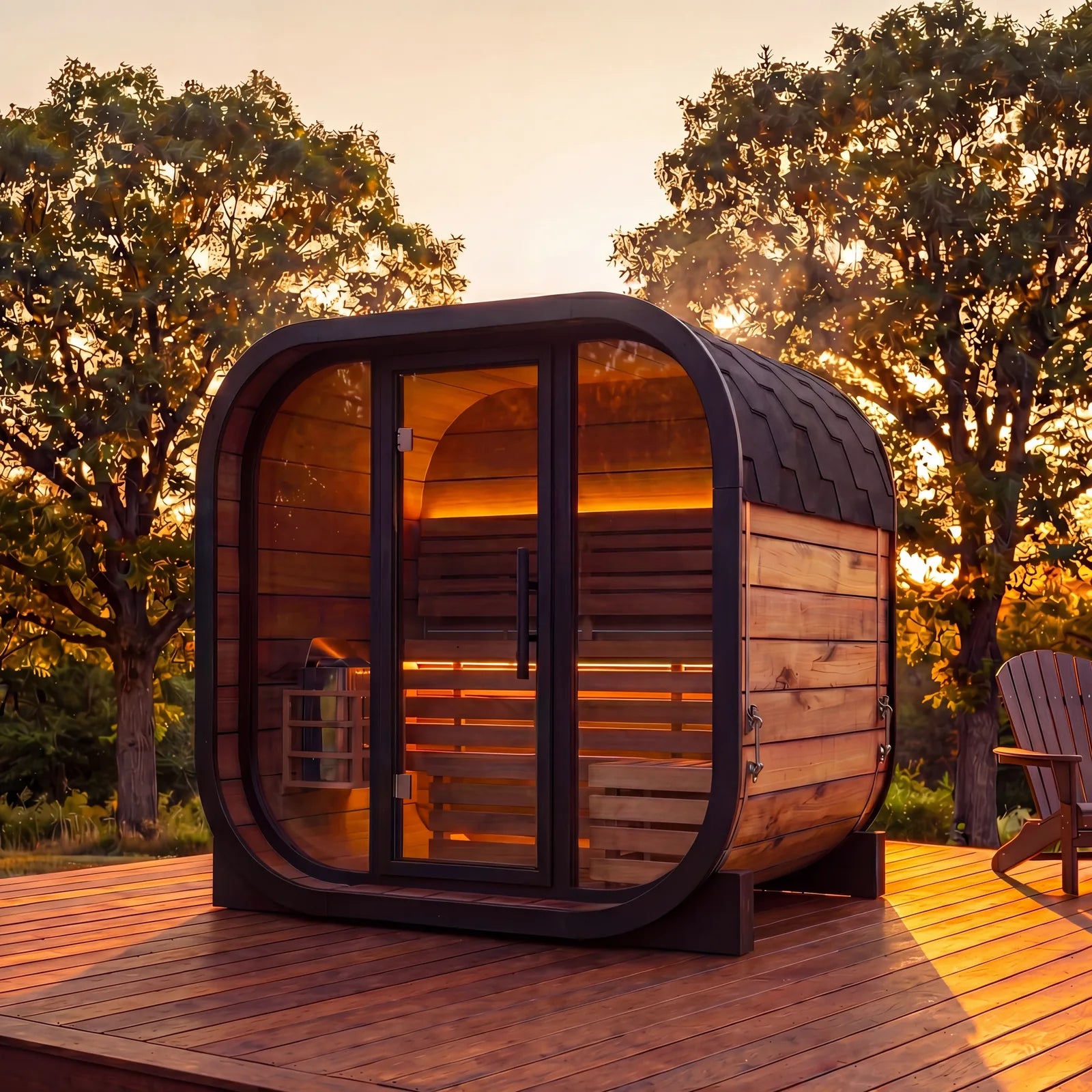
The mechanism is settled. The dose is documented. The only thing left is the hardware to hold 80-110°C reliably, day after day.
Heat changes more than your heart and your cells. It changes how you sleep, how you think, and how you handle stress. This is the part of sauna Andrew Huberman and Tim Ferriss talk about most, and the data backs them up.
Studies on therapeutic heat exposure in patients with major depressive disorder have shown a single session can elevate mood for weeks afterward. The most cited research used whole-body hyperthermia at therapeutic temperatures and found a six-week mood lift after a single 2-hour session. Traditional sauna shares the underlying mechanism even if the protocol differs.
The mechanism.
Heat triggers endorphin release through the hypothalamic-pituitary axis. The same circuit that produces runner's high fires up in the sauna. Heat also resets your dynorphin system (which makes things feel hard) and elevates serotonin signaling.
Protocol for mood effects:
Janssen et al. (2016) JAMA Psychiatry 73:789-795 (whole-body hyperthermia trial). Hussain et al. (2018) Evidence-Based Complementary and Alternative Medicine 2018:1857413.
Hormesis is the principle that small, controlled doses of stress make you stronger. Sauna is a clean example. Your heart rate climbs to 120 to 150 bpm, your cortisol shifts, and your body practices recovering from a controlled stressor.
Over time, this trains your autonomic nervous system to:
Why HRV matters.
HRV is the variation in time between heartbeats. Higher HRV means your nervous system is flexible and resilient. Lower HRV means it's stuck in fight-or-flight. Regular sauna users show HRV improvements within weeks, and HRV is one of the strongest predictors of longevity outside of standard biomarkers.
Why this stacks with meditation.
Meditation works through cognitive channels. Sauna works through physiological ones. You're directly training the systems that handle stress, not just rewiring how you think about it. Use both for compounding effects.
Pilch et al. (2014) International Journal of Occupational Medicine and Environmental Health 27:178-184. Calabrese et al. (2007) Microbial Cell 1:145-149.
Heat increases blood flow to the brain and elevates BDNF, a protein critical for learning, memory, and neuron formation. The acute effect is sharper focus and mental clarity in the hours after a session. The long-term effect is the 65% Alzheimer's risk reduction documented in Finnish data.
When to use sauna for cognitive work:
Laukkanen et al. (2017) Age and Ageing 46:245-249. Sleiman et al. (2016) eLife 5:e15092.
Sauna drives four adaptations that matter for athletic performance:
The numbers from the trained-athlete data.
A 30-minute session at 80 to 90°C (176 to 194°F) has been shown to double growth hormone in trained athletes. A 3-week post-workout sauna protocol improved time to exhaustion in competitive runners. Plasma volume expansion of around 7% with regular use gives the same physiological benefit as altitude training without the altitude.
Heat acclimation for race prep.
If you're training for a hot-weather race or event, 7 to 14 days of post-workout sauna sessions builds heat tolerance, expands plasma volume, and improves performance in heat. Many endurance athletes use this protocol in the two weeks before a hot race.
Stack it with training:
Scoon et al. (2007) Journal of Science and Medicine in Sport 10:259-262. Stanley et al. (2015) European Journal of Applied Physiology 115:785-794.
Your body falls asleep when core temperature drops. A sauna session in the evening creates a sharper temperature drop afterwards, triggering melatonin release and parasympathetic activation. Studies show evening sauna users fall asleep faster and spend more time in slow-wave sleep, the phase responsible for physical recovery and memory consolidation.
Evening sauna protocol:
Haghayegh et al. (2019) Sleep Medicine Reviews 46:124-138. Sung & Tochihara (2000) Journal of Physiological Anthropology and Applied Human Science 19:21-27.
Two effects show up early in regular sauna use, before any of the longer-term outcomes register. Your skin clears and your immune system gets stronger. Both come from the same underlying mechanism: heat-driven microcirculation and a controlled hormetic stress response that signals your body to ramp up defense and repair.
Heat opens the microcirculation in your skin, delivering oxygen and nutrients to cells that don't get much blood flow under normal conditions. Sweat then carries out trapped sebum, dead cells, and surface debris. Over weeks of regular use, three benefits show up:
The cold-shower stack.
Finishing your session with a cool rinse closes pores quickly and reduces redness. Cold also boosts skin tightness through vasoconstriction.
What sauna won't do.
Sauna will not replace topical care, sun protection, or treat severe skin conditions. People with active rosacea or eczema flare-ups may find sauna aggravates symptoms; talk to your dermatologist before regular use.
Hussain et al. (2018) Evidence-Based Complementary and Alternative Medicine 2018:1857413.
A study tracking sauna users versus non-users found a 30% lower incidence of common colds in the sauna group over a 6-month period. The Finnish cohort also showed 41% lower respiratory disease risk in the 4 to 7 sessions per week group.
The mechanism:
Practical takeaway.
If you're entering cold and flu season, 3 to 4 sauna sessions per week starting in early autumn is associated with measurably fewer infections through the winter. Consistency matters more than intensity for immune effects.
Ernst et al. (1990) Annals of Medicine 22:225-227. Pilch et al. (2014) International Journal of Occupational Medicine and Environmental Health 27:178-184.
Both heat your body. Both produce sweat. But the research, the temperature ranges, and the physiological responses are different in ways that matter. Here's the honest comparison without the brand bias either category usually pushes.
| Dimension | Traditional Sauna | Infrared Sauna |
|---|---|---|
| Operating temperature | 80–110°C (176–230°F) | 40–65°C (104–149°F) |
| Humidity | 10–20%, with löyly spikes | Dry, no humidity control |
| Heart rate response | 120–150 bpm | 100–120 bpm |
| Core temp elevation | Reaches 38.5°C+ (101.3°F+) in 15–20 min | Slower, may need 30–45 min |
| HSP activation | Strong (research-validated) | Weaker, less studied |
| Sweat output (20 min) | ~0.5 kg / 1.1 lb | ~0.2–0.3 kg / 0.4–0.7 lb |
| Long-term mortality data | 20-year Finnish cohort, 2,315 men | Limited, no comparable cohort |
| Cardiovascular outcome data | 50% reduction in CVD death | Smaller studies, mixed results |
| Dementia / Alzheimer's data | 65% risk reduction | None |
| Best for | Longevity, cardiovascular, cellular repair | Gentler exposure, joint comfort |
| What the research used | Yes | No |
For longevity, cardiovascular, and dementia outcomes, the Finnish research used traditional saunas at 80 to 90°C (176 to 194°F). Infrared has a smaller research base and has not been studied at the same scale or duration.
Traditional Finnish saunas operate at 80 to 100°C (176 to 212°F) with low humidity. Infrared saunas run at 40 to 65°C (104 to 149°F). That gap matters because heat shock protein production requires a core body temperature above 38.5°C (101.3°F). Infrared can get you there with longer sessions, but traditional gets you there faster and with bigger physiological responses across heart rate, vascular dilation, and sweat output.
In a study of 60 participants, a 20-minute traditional sauna at 80 to 90°C (176 to 194°F) produced:
Infrared at the same session length doesn't reach those numbers.
Kukkonen-Harjula et al. (1989) European Journal of Applied Physiology 58:543-550. Beever (2009) Canadian Family Physician 55:691-696.
Traditional saunas use löyly, the practice of pouring water over hot stones to create bursts of steam. This is not theater. It does four things:
Infrared is dry. There's no steam, no löyly, no humidity control. For pure thermal stress and cardiovascular conditioning, traditional wins.
Infrared isn't worse, it's different. It works well for:
But the longevity data, the cardiovascular data, and the dementia data all came from traditional saunas. If you're optimizing for the documented research outcomes, traditional is the gold standard.
Finland has roughly one sauna for every household across a population of 5.5 million. The cultural practice was added to the UNESCO Intangible Cultural Heritage list in 2020. Saunas have been used in Finland for centuries for hygiene, healing, ritual, childbirth, and community. That long cultural history is also the empirical backbone for the modern research.
The Finnish protocol:
This is the protocol that produced the longevity data. Bettr saunas are built to deliver this profile with margin to spare.
You know the science. Here's how to use it. Five protocols covering temperature, duration, pre and post routines, contraindications, and the Huberman stack.
Run this for the documented results
The Finnish longevity data was generated at 80 to 100°C (176 to 212°F). That's the range that triggers:
Bettr Ritual saunas reach up to 110°C (230°F) so you have margin even in cold weather, when the sauna has to work harder to hit the target range.
Where to start if you're new.
Begin at 70 to 75°C (158 to 167°F) for 10 to 15 minutes. Build up by 5°C and 5 minutes per week as your heat tolerance improves. You'll know you're in the right zone when your breathing deepens, your skin feels hot, but you're not overwhelmed.
Where to plateau.
Most users land at 85 to 90°C (185 to 194°F) for 15 to 20 minutes after 4 to 6 weeks of training. That's the protocol that drives the documented benefits.
The Finnish data shows a clear dose-response:
The session itself works in three phases:
Most users do 2 to 3 rounds of 15 to 20 minutes with cooling between. Total session time runs 45 to 75 minutes.
Before:
After:
The norepinephrine spike.
Cold exposure right after sauna spikes norepinephrine by up to 250%. This translates to better mood, sharper focus, and improved circulation. Even 30 seconds of cold makes a measurable difference.
Šrámek et al. (2000) European Journal of Applied Physiology 81:436-442.
Avoid or get medical clearance if you have:
Most people, including those with stable cardiovascular disease, can safely use a sauna. But heat is a real physiological stressor, so if you have a serious condition, get cleared first.
A note for medication users.
Diuretics, blood-pressure medications, and stimulants change how your body handles heat and fluid loss. If you're on any of them, talk to your prescribing doctor before starting a regular sauna routine.
Build tolerance gradually.
Overheating doesn't produce better results. It produces dizziness, dehydration, and nausea. Start short, build up, hydrate aggressively, and stop the session if you feel lightheaded or queasy.
Hannuksela et al. (2001) The American Journal of Medicine 114:118-126.
Dr. Andrew Huberman, Stanford neuroscientist and host of the Huberman Lab podcast, popularized this protocol:
The pairing matters. Heat and cold together activate hormetic stress in two directions, triggering HSP70 and BDNF release simultaneously.
Why post-workout sauna stacks with training:
The protocol works. Most people who don't get results made one of these mistakes.
Starting at 90°C / 194°F before your body has adapted to lower heat causes nausea, dizziness, and a bad first experience that kills the habit. Build up over 4 to 6 weeks. Start at 70 to 75°C (158 to 167°F).
A 20-minute session loses about 0.5 kg / 1.1 lb of fluid. If you walk in dehydrated, your body can't sweat properly and your blood pressure drops. Drink 500 ml / 17 oz before, 500 to 750 ml / 17 to 25 oz after.
Alcohol impairs thermoregulation and dilates blood vessels in ways that compound with sauna effects. The risk of fainting goes up sharply. The Finnish saying is that the sauna and the bottle don't mix.
The hormetic effect comes from repeated heat exposure with cooling between, not one extended session. Go in for 15 to 20 minutes, cool for 5 to 10 minutes, repeat. The cooling cycle is part of the protocol.
Cold exposure post-sauna spikes norepinephrine 250% and locks in the cardiovascular benefits. Even 30 seconds of cold makes a measurable difference. If you can't do a plunge, end your shower with 30 seconds of cold.
The Finnish data shows a dose-response. Two sessions per week shows benefits. Four to seven sessions per week shows the strongest effect. Sporadic monthly use doesn't produce the documented results. Build it into your week.
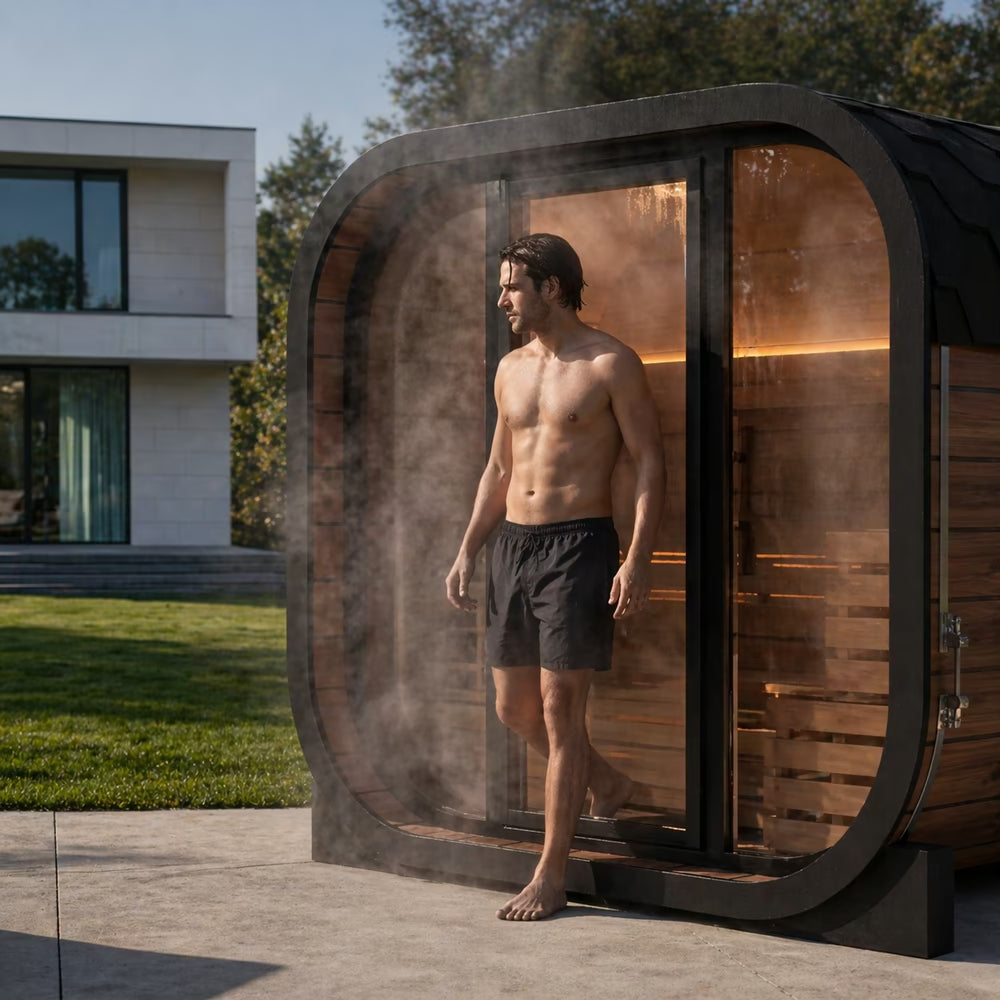
Most outdoor saunas top out at 70-75°C — below the range that produced the longevity data. Ritual saunas reach 80-110°C and hold it through cold weather, with the humidity control and airflow needed for daily use.
Shop The Ritual CollectionThe same brand used in commercial Finnish facilities. Included on every Ritual.
Versus 28-38mm on most competitors. Better heat retention, lower running cost.
Real Finnish humidity control built in, not an afterthought.
Fresh air in, used air out — even temperature top to bottom.
The questions we get most often.
The range of 80 to 90°C (176 to 194°F) is what the Finnish longevity research used. Start at 70 to 75°C (158 to 167°F) if you're new and increase the temperature as your heat tolerance builds. The high heat is what triggers cardiovascular adaptations and heat shock protein production. Infrared saunas at 45 to 60°C (113 to 140°F) don't provide the same acute heat stress.
Research points to 15 to 20 minutes per session as the optimal duration. You can do 2 to 3 rounds with cooling periods between. Total time per bathing session usually runs 30 to 60 minutes across all rounds.
The Finnish data shows a clear dose-response:
Start with 2 to 3 sessions per week and build from there.
Yes, if you listen to your body. Many Finns use a sauna daily. Keep these rules:
After is generally better for:
Before can work for warm-up and mental preparation. Most research and athlete protocols use post-workout sauna.
The Finnish protocol is sauna, then cool, then rest, then repeat 2 to 3 times.
Yes, ideally. Cold exposure after sauna spikes norepinephrine by up to 250%, locks in cardiovascular benefits, and accelerates recovery. Even 30 seconds of cold (a cold shower works) makes a measurable difference. The duration sweet spot is 1 to 3 minutes for most people.
Yes, it's standard hygiene practice, especially if sharing a sauna. A quick rinse is enough.
You can sip water during longer sessions, but most people don't. Focus on hydrating before and after. Bring water for sessions over 30 minutes or multi-round bathing.
Not directly. Sauna causes water loss, not fat loss. You'll lose 0.5 to 1 kg / 1 to 2 lb of water weight per session, which comes back when you rehydrate.
The indirect benefits for weight management are real:
Think of sauna as metabolic optimization rather than a weight loss tool.
Yes, measurably, but don't overstate it. Studies show:
Regular sauna provides a meaningful elimination pathway, especially for fat-soluble toxins. It's a legitimate detox support mechanism, not a cure for poisoning.
No, the opposite. Heat exposure post-workout:
The interference effect that cardio sometimes has on muscle gains doesn't apply to sauna because sauna isn't depleting muscle glycogen or causing mechanical damage.
Yes. Regular post-workout sauna in trained athletes has been shown to improve VO2 max alongside endurance markers. The mechanism includes plasma volume expansion of around 7%, improved thermoregulation, and better oxygen delivery. Heat acclimation protocols (7 to 14 days of post-workout sauna) are used by endurance athletes preparing for hot-weather events.
The mortality data is based on decades of regular use. This is a lifestyle practice, not a quick fix.
For the documented longevity benefits, yes. All major Finnish research used traditional hot-air saunas at 80 to 90°C (176 to 194°F). Infrared saunas operate cooler, don't provide the same cardiovascular stress, and haven't been studied long-term for mortality outcomes. Infrared can be gentler if you find traditional saunas too intense, but traditional is the gold standard if you can tolerate it.
Bettr Ritual saunas reach 80 to 110°C (176 to 230°F) with the included Harvia heater, well above the 80 to 90°C (176 to 194°F) range used in the Finnish longevity research. The optional Wi-Fi Control Heater upgrade lets you preheat from your phone so the sauna is ready when you walk out.
Avoid or consult a doctor if you have:
Most people, including those with stable heart disease, can safely use a sauna with medical clearance.
Yes. In Finland, children use saunas from infancy. Guidelines:
Every claim on this page is sourced. Here's the complete reference list, grouped by topic.
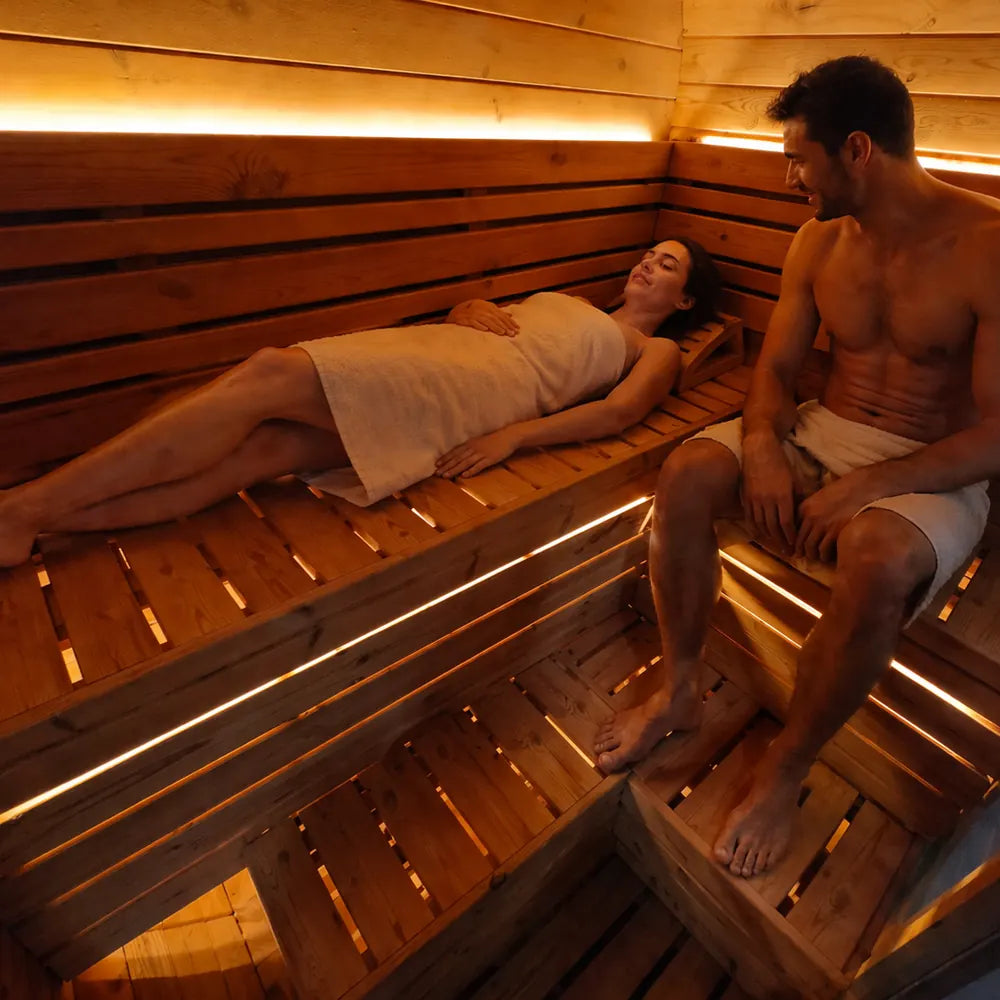
Free delivery. Easy DIY assembly. 3-year warranty.